Small AI as a Pathway to Safer AI?
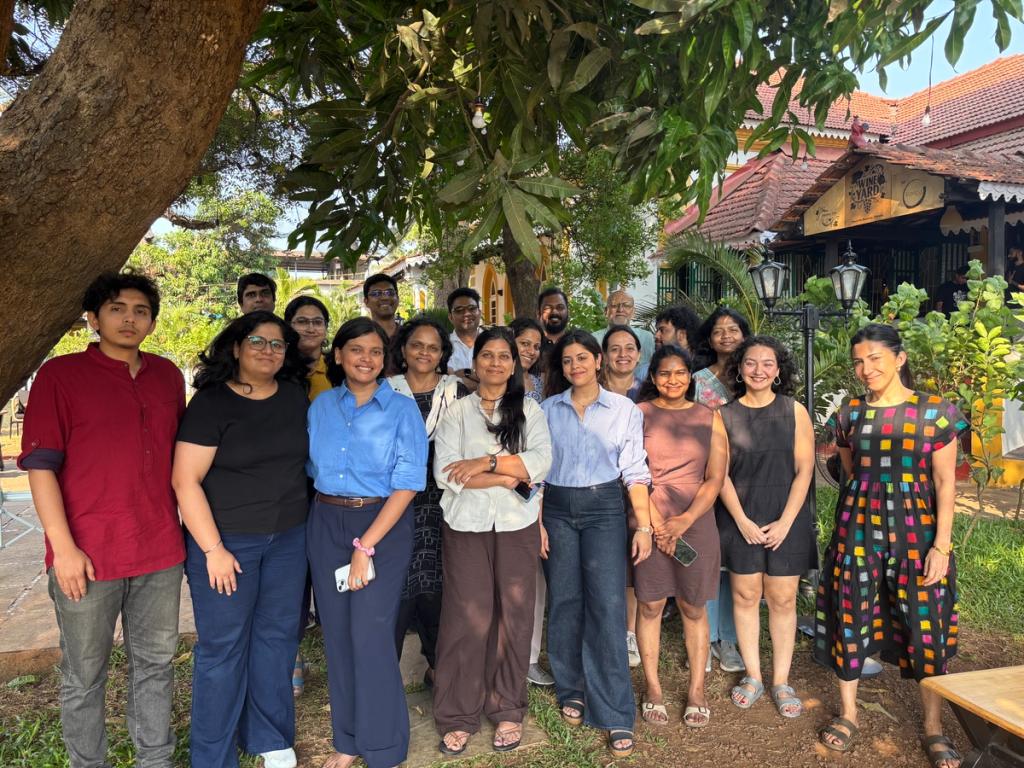
Powerful general-purpose AI systems pose well-documented risks, including environmental costs, opacity, bias, hallucinations, and the concentration of power among a handful of actors. This has fuelled interest in smaller, task-specific models as a safer path forward: they can run locally, are easier to evaluate, and allow safety to be defined narrowly rather than across an impossibly broad range of applications.But small doesn't automatically mean safe. Smaller models carry their own distinct risks: brittle reasoning, greater vulnerability to adversarial attacks, and safety properties that can erode through fine-tuning or quantisation. And as these models grow more efficient, they become increasingly capable of generating malicious code, persuasive content, and synthetic media, risks that existing regulatory frameworks are ill-equipped to address.This workshop, in collaboration with Careful Industries and supported by the Lloyd’s Register Foundation, aimed to examine what small AI actually means, mapping current architectures, deployment practices, and observed risks, with particular attention to India and the Global South. A key conceptual shift emerged from the discussions: moving away from "small AI" as a fixed technical category toward "specific AI" as a more useful framing. Rather than treating size as the primary variable, participants focused on contextual deployment, governability, infrastructure requirements, and institutional control.
The guiding questions became: What does AI that is environmentally sustainable, fair, and auditable without creating new dependencies actually look like? How do we get there? And what role does "specific AI" play in that future: what does it enable, and what does it preclude?